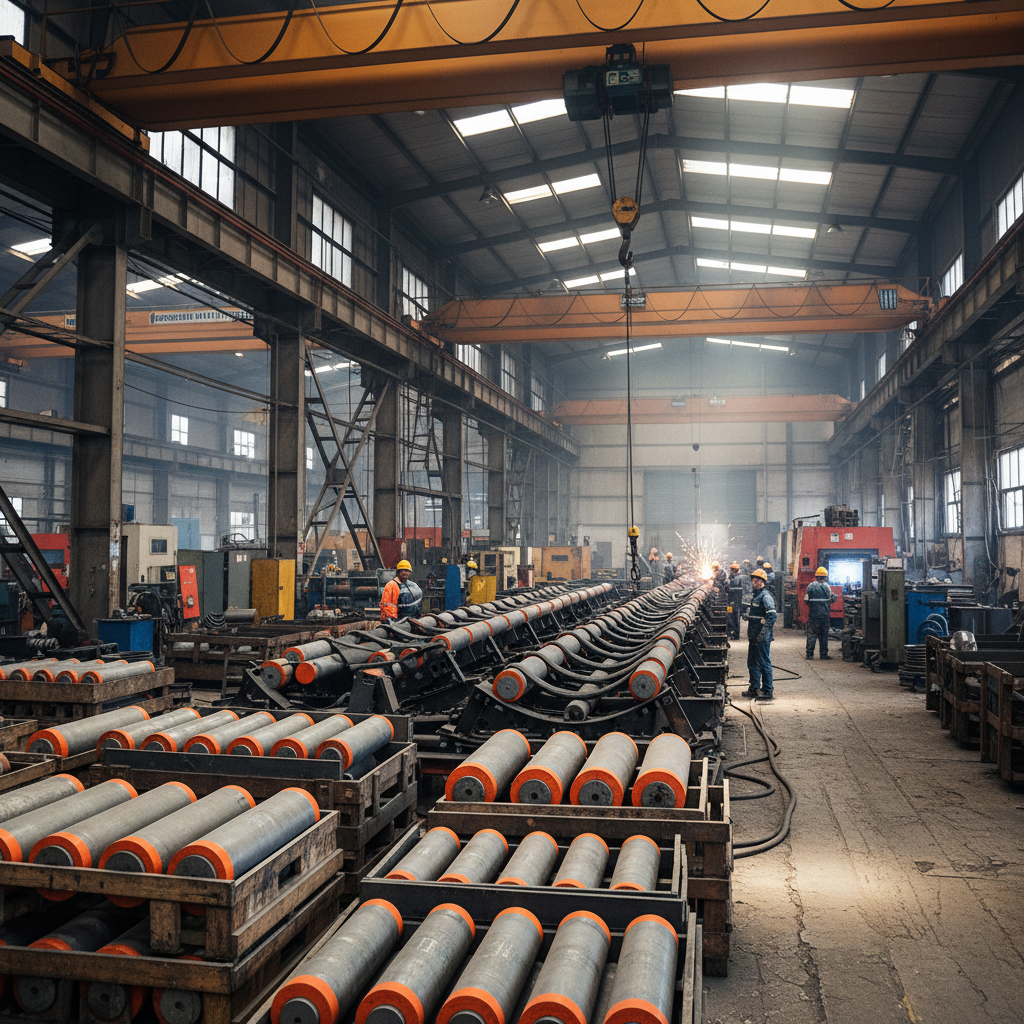
Ceramic roller manufacturers provide specialized industrial components designed to withstand extreme abrasion and chemical corrosion in heavy-duty conveyor systems. These high-performance rollers utilize advanced ceramic materials to ensure operational stability where standard steel or polymer rollers would fail prematurely.
In sectors such as mining, metallurgy, and chemical processing, the failure of a single roller can lead to costly downtime and safety hazards. The primary challenge for plant managers is balancing the initial procurement cost with the long-term reduction in maintenance frequency and belt wear.
This technical analysis explores the selection criteria for ceramic rollers, their performance advantages over traditional materials, and how to evaluate manufacturers to ensure your material handling system achieves maximum efficiency and durability.

1Fundamentals of Industrial Ceramic Rollers

Industrial ceramic rollers are engineered components specifically designed to resist surface wear through the integration of ceramic tiles or a full ceramic shell. Unlike standard rollers, these are designed for "impact zones" or areas of high friction where conveyor belts carry abrasive materials like ores, clinker, or chemicals.
The manufacturing process involves precision bonding of alumina or zirconia ceramics to a steel core. This ensures that the roller maintains the structural strength of steel while gaining the surface hardness of ceramic, which is significantly higher than that of hardened steel.
Professional ceramic roller manufacturers focus on the bonding agent's quality, as the interface between the ceramic and the steel is the most common point of failure under extreme temperature fluctuations or heavy impact loads.
2Core Technical Advantages and Material Properties
The primary advantage of ceramic rollers is their exceptional hardness. Alumina ceramics, commonly used in these products, provide a surface that is nearly impervious to scratching and abrasive wear from coarse minerals, which significantly reduces the frequency of roller replacement.
Beyond wear resistance, ceramic rollers offer superior chemical stability. They are inert to most acids and alkalis, making them indispensable for chemical plant conveyors where steel rollers would oxidize and corrode within weeks of operation.
Furthermore, the thermal stability of ceramic materials prevents deformation at high operating temperatures, ensuring that the conveyor belt remains properly aligned even when transporting hot materials like sintered ore or cement clinker.
3Application Scenarios in Harsh Environments
In the mining industry, ceramic rollers are deployed at loading points and transfer chutes. These areas experience the highest impact and abrasion; by utilizing ceramic components, operators can prevent the "cupping" effect often seen in metal rollers.
Chemical processing facilities utilize these rollers to handle corrosive granules and powdered catalysts. The ability of ceramic to resist chemical attack ensures that the rollers do not leach contaminants into the product stream, maintaining purity standards.
Port terminals handling bulk minerals also benefit from ceramic rollers. The salt-heavy maritime environment accelerates the corrosion of standard steel, whereas ceramic surfaces remain unaffected by salt spray and humidity.
4Comparative Performance Metrics and Analysis
When analyzing performance, the most critical metric is the Wear Rate Index. Ceramic rollers typically exhibit a wear rate that is 5 to 10 times lower than that of high-carbon steel rollers when transporting abrasive aggregates.
Another key factor is the impact on the conveyor belt. Because ceramic rollers can be designed with specific surface profiles, they can reduce the friction between the belt and the roller, thereby extending the belt's operational life.
ceramic roller manufacturers Performance Metrics
While the initial cost is higher, the Total Cost of Ownership (TCO) is lower due to reduced labor costs for replacement and minimized production losses associated with unplanned conveyor shutdowns.
5Procurement Standards and Selection Criteria
When selecting ceramic roller manufacturers, procurement teams should evaluate the ceramic grade (e.g., 92% vs 99% Alumina) and the bonding method used. Thermal bonding generally provides better adhesion than simple adhesive glues in high-temperature environments.
Compatibility is also essential. The rollers must match the existing conveyor frame specifications and bearing housing standards to avoid installation delays or misalignment that could cause belt tracking issues.
Finally, consider the lead time and customization options. High-quality manufacturers can tailor the ceramic tile spacing and thickness based on the specific grain size of the material being transported.
6Maintenance Considerations and Service Life
Maintenance for ceramic rollers focuses primarily on the bearing assembly rather than the shell. Since the ceramic surface rarely wears down, the failure point is typically the lubricated bearing or the seal.
Regular inspection for "ceramic spalling"—where tiles might detach due to extreme point-loading—is recommended. This is rare in quality products but can occur if the rollers are used for materials they weren't designed for.
Compared to steel rollers that may need replacement every 6 months in abrasive zones, ceramic rollers can often last 2 to 3 years, drastically altering the maintenance schedule of the facility.
7Ceramic vs. Polymer vs. Steel Roller Comparison
Choosing the right roller requires understanding the trade-offs between hardness, weight, and cost. While ceramic is the king of abrasion resistance, polymer rollers offer advantages in weight and noise reduction.
Steel rollers remain the standard for low-wear, general-purpose sections of the conveyor due to their low cost and high structural strength, but they fail quickly in corrosive or highly abrasive settings.
| Material Type | Wear Resistance | Chemical Resistance | Best Use Case |
|---|---|---|---|
| Ceramic Roller | Extreme | High | Impact Zones / Abrasive Ore |
| Polymer Roller | Moderate | High | Corrosive / Low Noise Areas |
| Steel Roller | Low | Low | General Purpose / Low Load |
| Hardened Steel | Moderate | Moderate | Moderate Abrasion / Budget Fit |
| Stainless Steel | Moderate | Extreme | Food Grade / Pharma / Acidic |
| Rubber Coated | Moderate | Moderate | High Grip / Impact Buffering |
For a balanced system, engineers often use a hybrid approach: ceramic rollers at the feed point, polymer rollers in the return path, and steel rollers for the main carry sections.
Frequently Asked Questions
Conclusion
Investing in high-quality components from reputable ceramic roller manufacturers is a strategic decision that moves a facility from reactive maintenance to proactive operational stability. By targeting high-wear zones with ceramic technology, companies can significantly reduce downtime and total ownership costs.
For procurement teams and engineers looking to optimize their material handling efficiency, reviewing technical specifications and material compatibility is key. Detailed product information and customized solutions can be explored at www.hbroule.com.