THE BUYER'S GUIDE / SELECTION
Choosing a Spiral Conveyor Roller: Working Requirements and Integration Fit
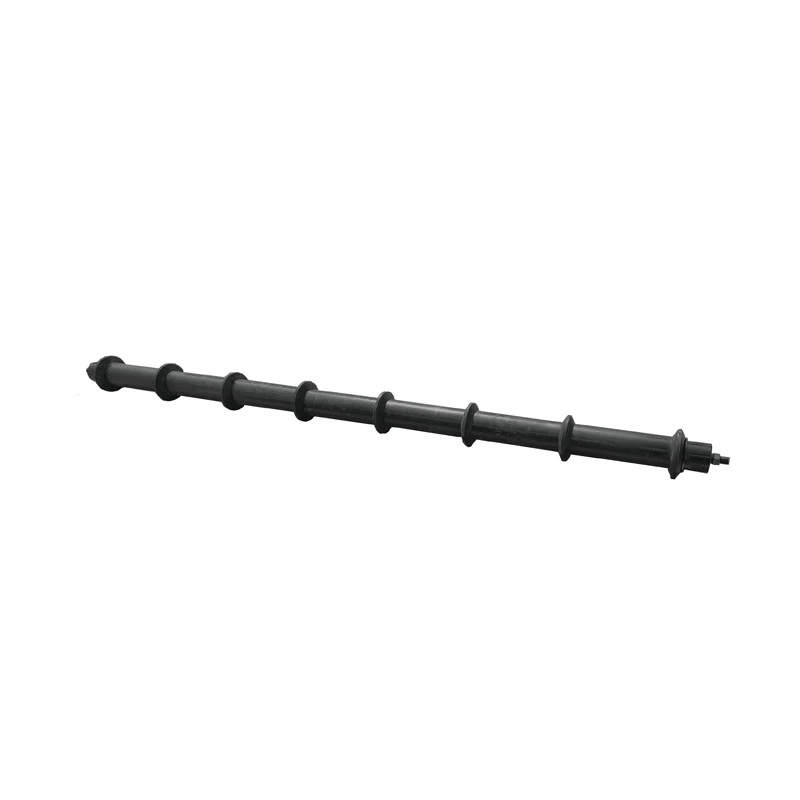
A spiral conveyor roller serves two functions that standard flat idlers cannot: it continuously scrapes sticky residues from the belt surface and applies lateral traction to correct belt drift. This guide explains the working conditions that make this roller the right choice, the structural features behind its dual function, and the practical integration factors buyers should verify before specifying one for their system.

Material type and adhesion characteristics: The spiral conveyor roller is designed for conveying materials with high viscosity and strong adhesion to belt surfaces — confirmed suitable materials include wet coal slurry, clay, phosphate compound fertilizer, and grain. If the material does not exhibit significant adhesion under operating conditions, a standard flat idler is generally sufficient.
Belt deviation risk and operating temperature: In systems where belt drift is a recurring problem, the spiral blade structure generates uniform lateral traction to passively reduce deviation. The spiral rubber roller is confirmed suitable for operation within −40 °C to 70 °C; applications outside this range require manufacturer confirmation before specification.
What This Roller Does — and Why It Matters
Not every conveyor line needs a spiral conveyor roller, but when the operating conditions call for one, no other standard idler can replicate its function. This component uses continuous spiral blades mounted along its body to achieve two things simultaneously: self-cleaning of the belt surface and passive deviation correction. Understanding both functions is essential before evaluating whether this roller fits your application.
According to confirmed product documentation from Hebei Roule Transport Machinery Manufacturing Co.,Ltd, spiral rollers are primarily used to clean debris adhered to the conveyor belt and can also play a role in adjusting deviation. The roller achieves this not through active mechanical control but through geometry — the spiral blade structure generates both a scraping force and a uniform lateral traction as the belt runs over it.
The Core Selection Criteria
1. Material Type: Sticky, Wet, or High-Viscosity Loads
The most decisive criterion is the nature of the material being conveyed. A spiral conveyor roller is specifically engineered for materials that adhere to belt surfaces — materials that ordinary smooth rollers cannot keep clear. Confirmed suitable applications include:
- Wet coal slurry — a common challenge in coal washing plants, where residue builds up rapidly on the return-side belt
- Clay — high plasticity means strong adhesion to rubber belt surfaces under load
- Sticky phosphate compound fertilizer — confirmed suitable in the phosphate compound fertilizer industry
- Bulk grain and small-particle materials — V-shaped spiral rollers can improve conveying efficiency in grain processing plants for bulk materials with good fluidity and small particle size
If your conveyed material does not exhibit viscosity or adhesion, a standard flat idler or return roller is generally sufficient.
2. Belt Deviation Risk in Your System
The second functional criterion is belt tracking. In systems where belt drift is a recurring problem — caused by uneven loading, frame misalignment, or wet operating conditions — the structural layout of this roller generates uniform lateral traction during rotation, helping keep the belt centered. This is a passive correction function: it reduces the tendency to drift rather than actively steering the belt. If your system has severe structural misalignment, additional mechanical correction measures should be evaluated alongside roller selection.
3. Operating Temperature Range
Confirmed product materials state that the spiral rubber roller can be used normally within the range of −40 °C to 70 °C. Buyers operating outside this range — such as high-temperature furnace feed systems — should confirm suitability with the manufacturer before specifying this roller type.
4. Installation Format: Bidirectional Spiral Design
The bidirectional spiral rubber roller is described as easy to install, with a self-centering conveyor action that reduces belt deviation while protecting the belt surface. Buyers should confirm the installation orientation and blade direction with the manufacturer to ensure the spiral geometry works correctly with the belt travel direction in their layout.
How the Spiral Blade Mechanism Works
Unlike a smooth return roller that only provides rotational support, this design rotates synchronously with the running belt. As it turns, the continuous spiral blades produce a stable scraping force that strips sticky attachments from the belt surface, preventing the material buildup that would otherwise press against the belt, distort tracking, or create spillage at the tail end.
Simultaneously, the helical blade geometry produces a lateral force component distributed evenly across the belt width — the mechanism behind the deviation-correction benefit. Because the traction is symmetrical, the belt is encouraged to run centrally rather than drifting toward one side.
This dual action — cleaning and correcting — addresses two interrelated problems. Material that builds up on the belt return surface adds uneven weight and creates friction irregularities that themselves cause drift. By resolving the adhesion issue, the spiral blade design also reduces a primary root cause of deviation.
Integration Fit Checklist
Before finalizing your specification, verify the following against your existing system:
| Integration Factor | What to Check |
|---|---|
| Material viscosity | Does your material adhere to the belt surface under operating conditions? |
| Belt width and roller diameter | Confirm dimensional compatibility with your current conveyor frame |
| Operating temperature | Is the application within −40 °C to 70 °C? |
| Installation position | Typically used on the return side; confirm placement with the manufacturer |
| Belt speed and load | Match roller capacity to your actual operating parameters |
| Blade direction | Confirm bidirectional or unidirectional spiral orientation relative to belt travel |
Which Applications Are Confirmed Suitable
Based on the confirmed product description from Hebei Roule Transport Machinery Manufacturing Co.,Ltd, this roller type is confirmed suitable for the following application contexts:
- Coal washing plants — handling wet coal slurry with a high risk of belt surface adhesion
- Clay or earthworks conveying — high-plasticity materials that adhere strongly under compression
- Phosphate compound fertilizer production — confirmed by product documentation as a suitable industry
- Grain processing plants — V-shaped spiral roller variant confirmed for bulk materials with good fluidity and small particle size
- General wet material conveying — any application where the belt return surface accumulates sticky residue
When This Roller May Not Be the Right Fit
This is a specialized component designed for specific working conditions, not a universal replacement for standard conveyor rollers. Consider a different roller type if:
- The conveyed material is dry, non-adhesive, and free-flowing
- Belt deviation is caused by structural frame issues rather than material accumulation
- Operating temperatures fall outside −40 °C to 70 °C without manufacturer confirmation
- The installation position does not align with the return-side placement this design is optimized for
Summary: The Key Selection Decision
The primary question for any buyer evaluating a spiral conveyor roller is straightforward: does your conveyed material adhere to the belt surface under operating conditions? If the answer is yes — particularly for wet coal slurry, clay, fertilizer, or similarly sticky bulk materials — then this roller type addresses a real functional need that a standard flat idler cannot resolve.
If belt deviation is also a concern, the spiral roller's passive correction mechanism provides an additional benefit in the same installation. For buyers in mining, metallurgy, coal washing, or chemical processing handling wet or viscous materials, specifying this roller on the return side is worth evaluating carefully.
For detailed specifications and configuration guidance, contact Hebei Roule Transport Machinery Manufacturing Co.,Ltd directly.
THE PEOPLE

About the author
THE COMPANY
Hebei Roule Transport Machinery Manufacturing Co.,Ltd
Hebei Roule Conveyor Machinery Manufacturing Co., Ltd. is a strong factory specializing in research and development, design, production, and sales. Since its establishment in 2010, we have been striving for excellence and committed to the development of the conveyor machinery industry. Our company specializes in roller series, conveyor belt series, conveyor belt series, drum series, and supporting conveyor machinery accessories.…
About Us ↗Visit company website ↗YOUR NEXT STEP
Bring your brief. Start a useful conversation.
Use case, specification, quantity and delivery window: make the next conversation specific.